The Great E-Commerce Migration: Why Amazon Sellers are Flocking to AliExpress in 2026
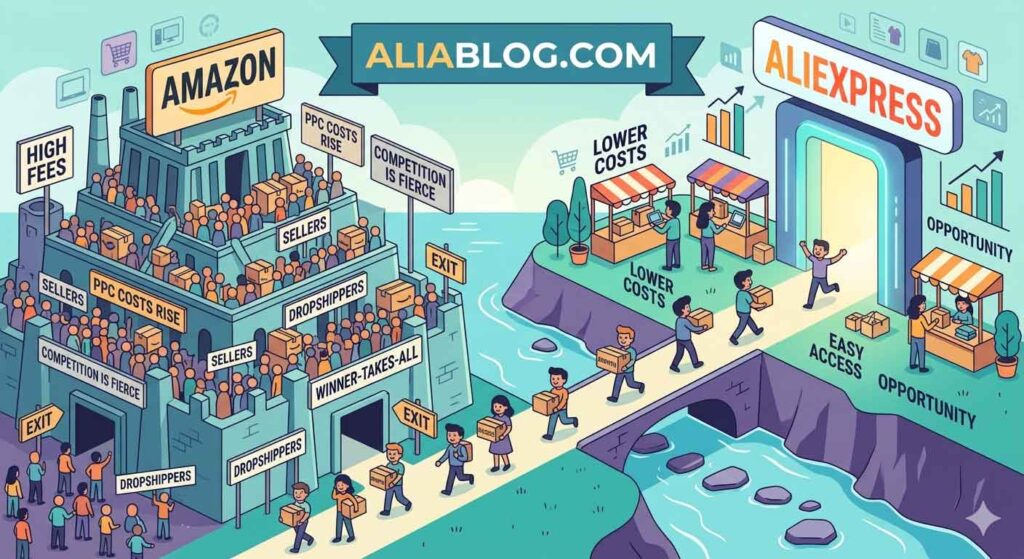
For years, Amazon was the undisputed “Gold Mine” of global e-commerce. But as we move through 2026, the landscape has shifted. Recent data from Marketplace Pulse reveals a startling reality: the Amazon “feast” is becoming a private banquet for a tiny elite, leaving millions of small sellers and dropshippers searching for a new home.
That home is increasingly AliExpress.
Upcoming AliExpress Sales in 2026
1. The 1.6% Rule: Amazon’s “Winner-Takes-All” Reality
The numbers are sobering. In the US market, a mere 7,760 sellers (just 1.6% of active accounts) now control 50% of the total GMV. Three years ago, it took 15,000 sellers to hold that much market share.
While the “pie” is growing, the number of people eating it has been cut in half. For the remaining 400,000+ small-to-medium sellers, the struggle is real. With rising PPC costs, stricter storage fees, and aggressive account policing, the “Great Compression” is forcing smaller players out of the game.
2. The “New Seller” Drought
Registering a new shop on Amazon used to be the default first step for entrepreneurs. Not anymore. In 2025, new seller registrations in the US dropped to an all-time low of under 170,000—down from 300,000 the year prior.
E-commerce experts suggest that Amazon is no longer a place where you can “pick up money from the floor.” To succeed now, you need heavy capital, a massive advertising budget, and a deep supply chain. For dropshippers and agile entrepreneurs, the barrier to entry has simply become too high.
3. Why AliExpress is the Strategic “Plan B”
While Amazon builds walls, AliExpress is building bridges. Industry surveys indicate that 87% of active Amazon sellers are either currently setting up or planning to launch AliExpress stores this year.
Why the sudden shift? It comes down to the bottom line:
- Lower Commissions: Category commissions on AliExpress are often 10% lower than Amazon’s.
- Reduced Operating Costs: General operating expenses on AliExpress are roughly half of what it costs to run a comparable Amazon FBA business.
- Brand Support: AliExpress has launched “Super Brand” initiatives specifically designed to recruit high-quality sellers from Amazon and Tmall, offering them a “growth curve” that Amazon no longer provides to newcomers.
4. A Multi-Platform Future
The era of being an “Amazon-only” seller is ending. With TikTok Shop making it easier to sync Amazon listings and Temu capturing massive market share, sellers are realizing they need to diversify to survive.
Major brands in the cycling, home furniture, and automotive niches (like RockBros and Alpicool) have already doubled their stock in AliExpress overseas warehouses. They aren’t leaving Amazon entirely, but they are finding that AliExpress offers a much higher Return on Investment (ROI) for their growth efforts.
Final Thoughts for Sellers
Amazon remains a powerhouse, but it is no longer the friendliest place for the “little guy.” If you are feeling the squeeze of high fees and hyper-competition, 2026 is the year to diversify. AliExpress is no longer just a sourcing hub—it is becoming the primary storefront for the next generation of global sellers.